- Fractionality
- Posts
- Welcome to Fractionality #7: Scaling Beyond Solo
Welcome to Fractionality #7: Scaling Beyond Solo
Welcome back to Fractionality the essential resource for fractional executives and the companies that need them.Yes, it's been six months. No, I haven't forgotten about you. Consider this your end-of-year gift - one more edition to close out 2025. You're welcome.Now, where were we?Here's something I've noticed about fractionals: they're high performers. Ambitious. Once they've figured out the model landed a few clients, got their rhythm, maybe filled up to three or four days a week, they don't sit back and relax.They look around and ask: "Okay, what's next? How do I go beyond this?" This month, we're exploring the answer.

zachary king
December 18, 2025
Want more Fractional insights like this?
Quick Hit 🎯
Singapore's government-backed fractional pilot is now live - Korn Ferry reports 6x more requests from Singapore firms for fractional leaders in 2025 vs last year. More on this below.
⚡ TODAY'S DROPS
Scaling Beyond Solo: Four Models That Actually Work🦸

You've cracked the fractional code. You've got clients. You're delivering. The income is good.
And now you're thinking about putting a team together.
This is the natural progression for high performers. You didn't become a fractional to cap out at three clients. You're wired to build, to grow, to find the next level.
The question isn't if you should scale. It's how.
I've been watching four models work across APAC and the UK. Each takes a different path beyond solo. Each comes with trade-offs.
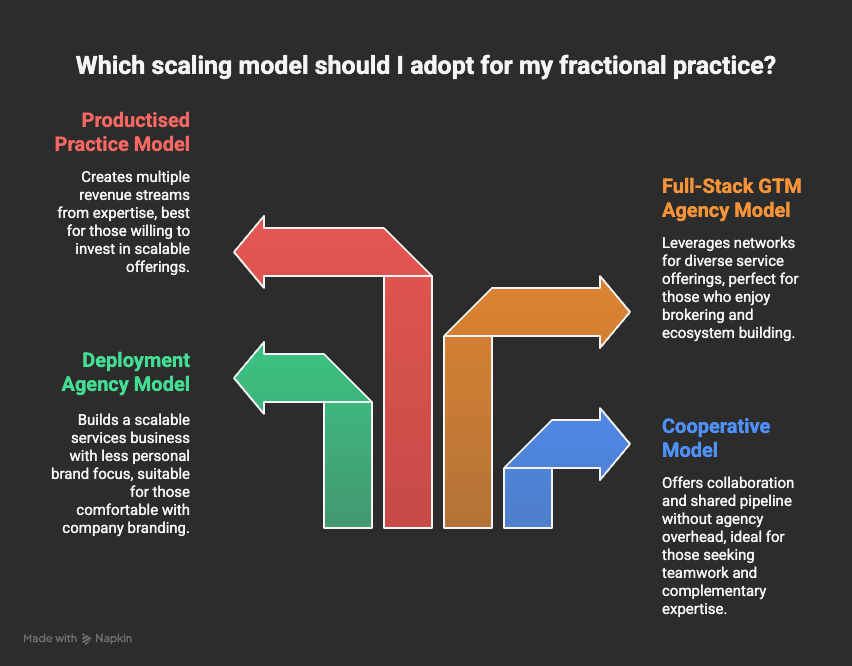
Model 1: The Cooperative (Proxi, New Zealand)
What they do: A team of fractional CMOs who work collectively for NZ tech companies.
Website: proxi.co.nz
Proxi co-founder Christelle Blanchet-Aissaoui started the company in 2018 after burning out from a global CMO role. She realised NZ tech companies needed senior marketing leadership but couldn't afford or attract full-time CMOs. So she called a peer, who said: "I did that a few years back, but it was called consultant back then and I felt it was really lonely. What about we join forces?"
That's the core insight: together we are stronger.
How it works:
Most engagements start with a 4-hour accelerator workshop with two Proxi CMOs
Combined expertise delivers exponential value. As Christelle puts it: "By bringing our two expertise together, we were able to deliver a very solid strategy quite fast."
They work from the inside, not the outside: "We work as if we are full-time CMOs within the business."
The goal is to leave: "The idea is to really leave the business as soon as we can and not stay because we can."
Why it works: Not everyone in a collective needs to be a rainmaker. As Christelle says: "Not everybody's an entrepreneur and not everybody's gonna go fishing for clients. But they are amazing at what they do. So it's not because you don't go fishing, that you can't eat the fish."
The collective handles business development so the practitioners can focus on delivery.
The trade-off: You're building a shared identity, not just your personal brand. That's a feature for some, a bug for others.
Best for: Fractionals who want collaboration, shared pipeline, and complementary expertise without the overhead of building an agency.
Go deeper: I interviewed Christelle about building Proxi's co-op model here.
Model 2: The Deployment Agency (We Are Charlotte, Australia)
What they do: HR and People specialists who deploy as embedded teams, expansion support, or project leads.
Website: wearecharlotte.com.au
I first met founder Jess Olsson about eight years ago when she was still client-side. I interviewed for a role she was hiring for. Didn't get it. Not that I'm bitter, Jess. Honestly.
She's gone on to build a killer company and I'm genuinely impressed by what they've done in such a short time. We Are Charlotte now serves 70+ clients including IAG, Envato, and PEXA across professional services, finance, retail, and tech.
How it works:
Three deployment modes:
Embedded Teams: Dedicated People & Culture professionals working alongside internal staff, blending strategy with day-to-day HR support
Expansion Support: Extending internal team capacity during peak periods or when specialised expertise is needed
Strategic Projects: Full ownership of standalone initiatives, working collaboratively but taking responsibility for delivery
Why it works: They've cracked the positioning: "Big enough to bring depth and scale, small enough to stay personal." Clients stay because they deliver on both strategy and execution.
The trade-off: You're building a services business. The brand is the company, not you. That means you can sell it one day, but it also means less personal profile building.
Best for: Fractionals who want to build something bigger than themselves and are comfortable with their individual brand taking a back seat.
Model 3: The Full-Stack GTM Agency (Scalewise, UK)
What they do: GTM talent placement combining diagnostics, fractional leadership, and permanent hiring.
Website: scalewise.com
Founded by Tom Glason and Gavin Sumner, who also co-founded Pavilion UK (the largest GTM community in the country). They've built a model that monetises their network.
How it works:
Three service lines:
GTM Diagnostics: Data-driven assessments that identify what's broken
Fractional Leadership: Place pre-vetted GTM leaders on flexible terms (hourly, daily, project-based)
Permanent Hiring: When clients need full-time, leverage the same network
Why it works: What I find clever is they're genuinely not tied to one model. Need a fractional? They've got you. Need a full-time hire? They can do that too. Need a fractional that leads into a full-time placement? Also covered.
They offer the full spectrum, so whatever the company actually needs, they can deliver. No hammer looking for nails.
Big fan of what they're building from over here.
The trade-off: You're the broker, not the practitioner. If you love the work itself, this model might feel removed from the action.
Best for: Well-networked fractionals who enjoy building ecosystems and can monetise relationships without needing to do all the delivery themselves.
Model 4: The Productised Practice (Sell Anything, Australia)
What they do: Sales expertise packaged into multiple offerings to meet founders where they are.
Website: sellanything.io
Keen-eyed readers may have noticed on LinkedIn that I've actually been working with the legends at Sell Anything. Massive fan of what Sean, Roy, and Kat have built. Big things coming in 2026. Keep a close eye on this one.
When they launched their accelerator program, my immediate thought was: wow, they've nailed the scaling issue. That's how you get past it. Starting that early in the journey for founders builds incredible pipeline. Smart play. And they get rave reviews for it.
How it works:
Fractional Leadership: Embed as sales leadership for 3-12 months, developing and managing the entire sales function
Coaching & Advisory: Tailored workshops, active deal coaching, async support, and sales playbook development
Sales Accelerator: Australia's first B2B SaaS Sales Accelerator, a 5-week program teaching scalable, repeatable sales processes
They've worked with 1000+ founders and are trusted partners to Startmate, Tractor Ventures, LaunchVic, and ThincLab.
Why it works: Multiple entry points create a pipeline. Someone does the accelerator, then wants coaching, then brings you in as fractional leadership. Each product feeds the next. No boiler room tactics, just process-driven, repeatable sales development.
The trade-off: Building products takes time away from client delivery. You need to decide which hat you're wearing on any given day. I know for a fact the Sell Anything crew have been burning the candle this year. And cooking.
Best for: Fractionals who want to leverage their expertise beyond hours-for-dollars and are willing to invest in building scalable offerings.
New accelerator launching in February. If you're a founder who needs to sharpen your sales, check it out [here]. Tell them I sent you.
Which Model Fits You?
If you want... | Consider... |
|---|---|
Collaboration + shared pipeline without building an agency | Cooperative (Proxi model) |
Scale without personal brand dependency | Deployment Agency (Charlotte model) |
Leverage your network without doing all delivery | Full-Stack GTM Agency (Scalewise model) |
Multiple revenue streams from one expertise | Productised Practice (Sell Anything model) |
Here's the thing nobody tells you: you don't have to choose just one.
Many successful fractionals run a hybrid. Solo work for their favourite clients. A loose cooperative for bigger opportunities. A course or workshop to build leverage. The models blend.
The goal isn't to pick a model. It's to design a practice that matches your ambition.
Want more takes on the future of fractional work? Subscribe to get monthly insights
Community News 🗞️: FEC 2.0 a year in the life
uick recap of what we've been up to in 2025:
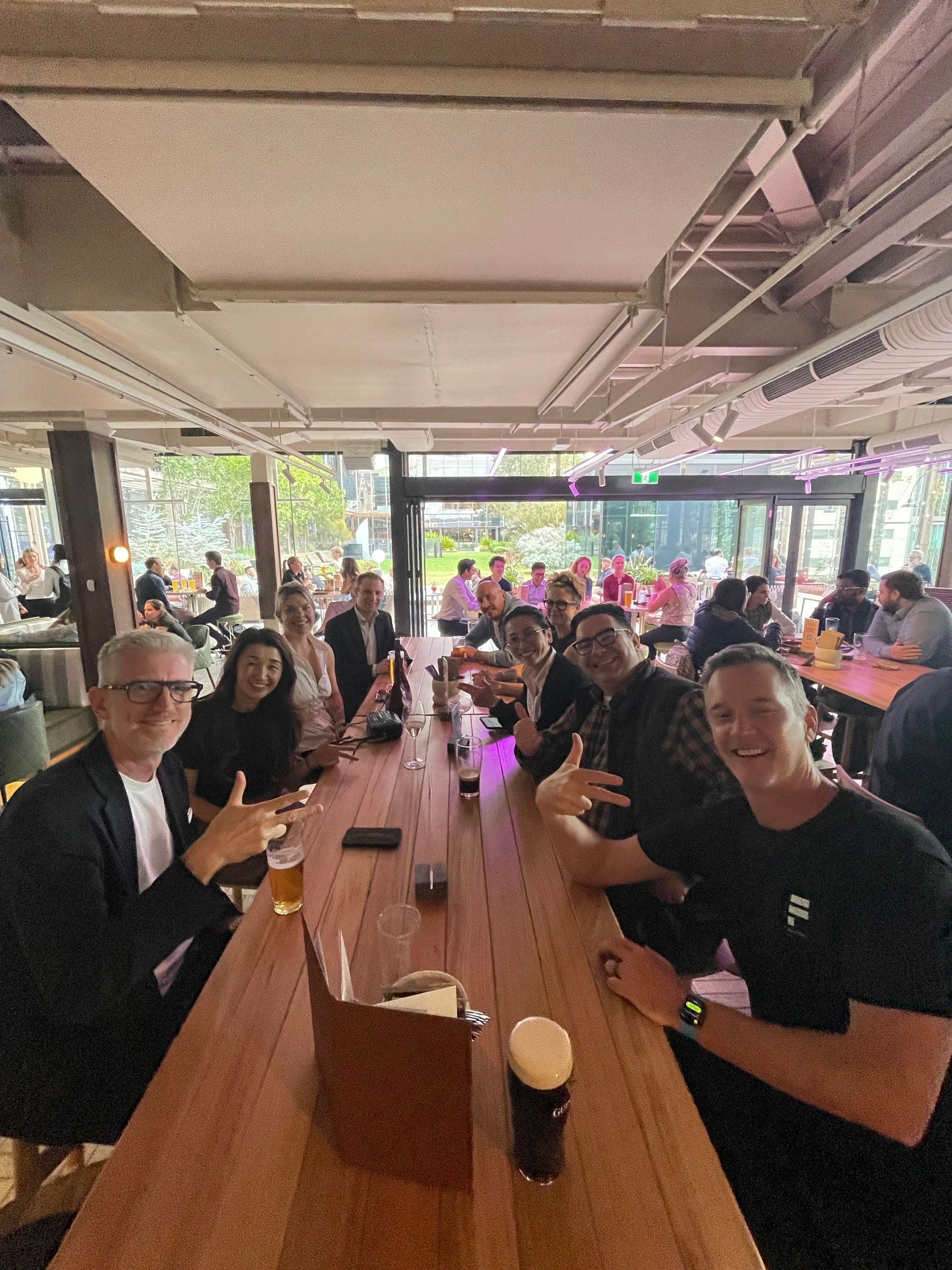
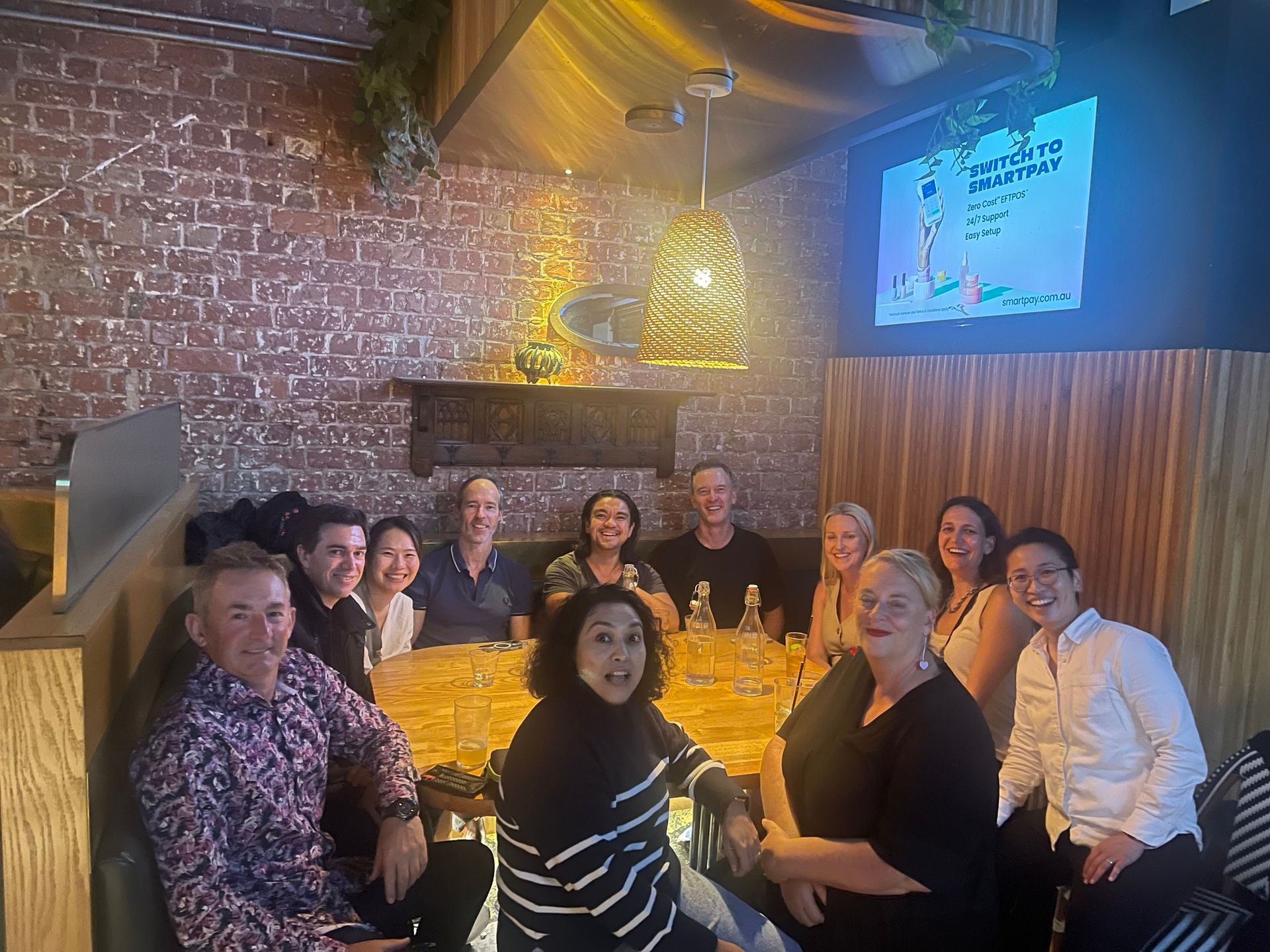
Live Events: IRL meetups across Sydney, Melbourne, and Brisbane. Pubs, proper venues, good conversations. There's something about getting fractionals in the same room that just works.
Virtual: Twelve monthly calls (one every month, as promised), plus workshops and office hours throughout the year.
The Numbers: Over on Mighty Networks, we've hit 3,500+ contributions from around 100 members. That's a lot of questions answered, wins shared, and advice given. And we're just getting started.
What's Coming in 2026:
The podcast is launching (honestly, this time)
More workshops
More live events
Microevents
And so, so much more
To each and every one of you who took some of your precious time to share and help each other in this brave new world of fractional: I deeply, truly appreciate it. Thank you.
Live Events: IRL meetups across Sydney, Melbourne, and Brisbane. Pubs, proper venues, good conversations. There's something about getting fractionals in the same room that just works.
Virtual: Twelve monthly calls (one every month, as promised), plus workshops and office hours throughout the year.
The Numbers: Over on Mighty Networks, we've hit 3,500+ contributions from around 100 members. That's a lot of questions answered, wins shared, and advice given. And we're just getting started.
What's Coming in 2026:
The podcast is launching (honestly, this time)
More workshops
More live events
Microevents
And so, so much more
To each and every one of you who took some of your precious time to share and help each other in this brave new world of fractional: I deeply, truly appreciate it. Thank you.
Join FEC 2.0 now and get:
Founding member rates
Access to masterclasses
AI-powered member matching
The complete Fractional Playbook
Not ready to join yet? Follow us on LinkedIn to stay in the loop.
Member Spotlight 👋 Kayla Medica
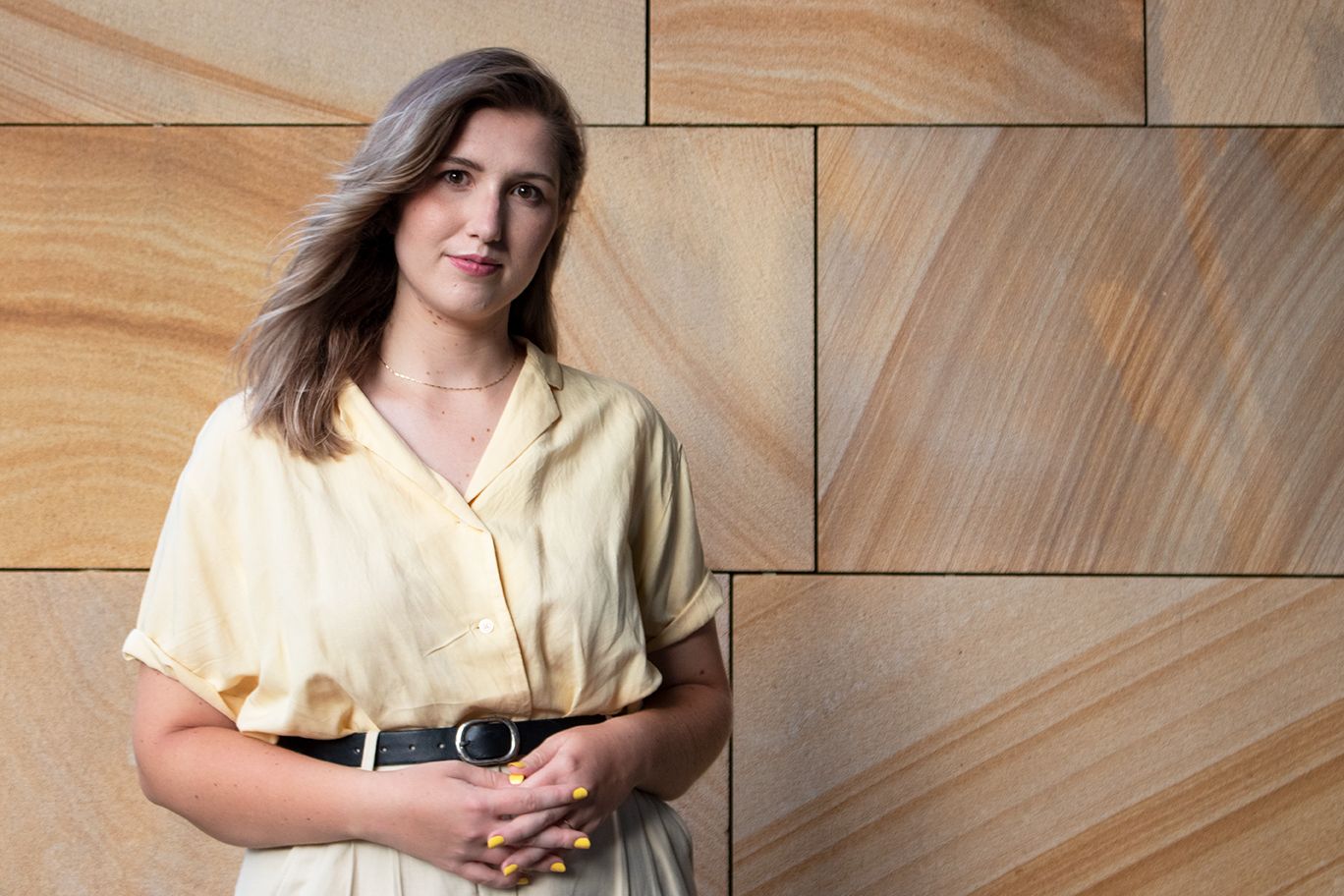
"Tell us about your pivot to fractional work - what sparked the change?": I was working at an organisation that was affected by the 2022 tech mass layoffs, and my whole team (both above and below me!) was cut, with just me left to do the work of the whole team. Sounded like a great time to get a new job, but it was also 2 weeks before Christmas, so I put out a LinkedIn post to organise some coffees and talks, and instead quite a few people offered me project work "to get to the new year".... 2 and a bit years later I'm still here!
"What's your superpower as a fractional leader?": I'm all about bridging the gap between teams who aren't working well together. Usually it's sales and marketing, but it can also be the product or customer success teams, and any way these four teams work together as a go-to-market function.
"Describe your ideal client in one sentence": B2B SaaS just approaching the scale up phase, with a founder who isn't doing this for the first time.
"Share one unexpected joy of fractional work": I've really become friends with a lot of my clients and they treat me as a true member of the team! It's been great to be so welcomed, and have my contributions so highly valued.
"What's your #1 tip for new fractional executives?" Your experience, advice, and mental library of situations and contexts is valuable and should be factored into your price.
"What should founders know before hiring their first fractional?" Founders need to think about whether they want someone deeply embedded in the team, joining WIPs or standup meetings, and having access to systems. If they're not going to do this, then fractional won't be the best arrangement, and they should look to a contractor or freelancer.
"Where can people connect with you?" Please come and say hi on LinkedIn: https://www.linkedin.com/in/kayla-medica/
"Share a recent win or learning moment": I'm looking to expand my offering to workshops and recently ran a full day workshop on a new topic for the first time and received great feedback during and after the workshop. This was really validating and is boosting my confidence ahead of launching this publicly!
"What's one tool/resource you can't live without?": I'd actually say my laptop itself. It can handle having a billion tabs open that are all for different clients, plus running multiple browsers, having outlook and adobe apps open, Slack and Teams both open, and still have enough juice for Spotify. If I had a crappier laptop I wouldn't be able to jump around and respond when my clients ask me for something.
"Describe your fractional work style in three words": Transparent, over-communicating, friendly
"What's the most common challenge your clients face?": Lack of foundations. Whatever the problem they come to me with is, it's almost always traced back to scaling quickly without taking a moment to stop and put foundations in.
"Share your favorite time management hack": To-do lists and dopamine hits when you tick an item off
🛠️ Tactical Gold: Structuring Revenue Shares That Actually Work
If you're collaborating with other fractionals: whether formally or informally: you need to talk about money. Here's what I've seen work:
The 10% Rule
Structure: 10% in, 10% out. Someone brings you work, you give them 10%. You send work to someone else, you can ask for 10%.
When it works: Referrals, introductions, passing on overflow
Pro: Simple, fair, easy to remember
Con: None really. It's okay to ask for this. Normalise it.
The Joint Delivery Model
Structure: Split based on time/contribution (e.g., 60/40, 70/30)
When it works: When you're genuinely co-delivering
Pro: True collaboration, client gets multiple experts
Con: Requires clear scope definition and trust
The White-Label Model
Structure: You subcontract to another fractional at a set rate, mark up to client
When it works: When you have the client relationship but not the capacity
Pro: You control the client experience
Con: You're on the hook if your subcontractor underdelivers
The Equity/Partnership Model
Structure: Formal business entity with profit sharing
When it works: Long-term commitment to building something together
Pro: True alignment, can build enterprise value
Con: Complexity, legal costs, harder to unwind
The golden rule: Get it in writing before the first dollar changes hands. A simple email confirmation beats a handshake every time.
🤖 AI Tip of the Month: Claude Code Is Your New Strategic Partner, Research Team, Developer, Data Analyst, Friend, Co-worker, and Co-conspirator
If you're not using Claude Code yet, you're leaving money on the table.
With the new Opus 4.5 model, this is as close to AGI as we've seen. And here's the thing: it's not just for developers. I use it every single day as a fractional, and not for coding.
My setup: 10+ terminal instances across 5 workstreams (2 business units + 3 clients), each running from dedicated project directories with isolated context. Why? Each project maintains its own context, file structure, and conversation history. I can context-switch between clients without cross-contamination or re-explaining the domain.
What I'm using it for:
Content Creation - Newsletter writing, social posts, marketing copy
Strategic Thinking - Business planning, positioning, market analysis
Research & Synthesis - Funding announcements, company intelligence, industry trends
Workflow Automation - Building scripts to systematize recurring tasks (funding scrapers, calendar invite generators)
Technical Implementation - Web scraping, API integrations, data processing pipelines
Client Deliverables - Reports, proposals, analysis documents, dashboards
Think of it as a strategic partner that's available 24/7, never gets tired, and has read everything. If you're a high-performing fractional who wants to multiply your output, this is the tool.
I've got a full post coming on how I use Claude Code as a fractional. Watch this space.
CRM of choice: While I'm here: if you need a CRM, check out Attio. It's AI-first, the free version is more than enough for most fractionals, and it doesn't feel like you're wrestling with Salesforce. Use my referral link for 10% off:
Cool Stuff Worth Checking Out 👀
Singapore Pilot Update: The pilot with The Fractional Directory is now underway. Cheering for our friends over there. If you haven't already, check them out and make sure you're registered. They're active in New Zealand, Singapore, and now Australia, so it's worth being on there for sure.
Michelle Allbon on iHeart discussing the deal
On Scaling Models:
Proxi Case Study: FileInvite: How multi-fractional leadership transformed a SaaS business
Worth Your Time:
Lenny's Podcast: What World-Class GTM Looks Like in 2026: Jeanne DeWitt Grosser (COO of Vercel, ex-Stripe) on modern GTM strategy. Fun fact: I've flunked out of the interview process with two of her sales orgs. Still a fan.
Lenny's Newsletter: Everyone Should Be Using Claude Code More: 50 creative ways non-technical people are using it
Every.to: How to Use Claude Code for Everyday Tasks: No programming required
Vendux: Now 850+ fractional sales leaders, largest network in North America
Wrapping Up
The fractional model is maturing. Governments are endorsing it. Agencies are scaling it. Cooperatives are proving it works.
And if you're reading this thinking "I want more": good. That's the high performer in you talking.
You don't have to stay solo forever. But you also don't have to build an empire. The question is: what does your next level look like?
Answer that first. The model follows.
See you next month.
Zac
Got thoughts on scaling models? Hit reply: I read everything.
Want more fractional insights delivered monthly? Hit subscribe
Already a subscriber? Share this with a fellow fractional
Ready to join FEC? Apply here
Reply